Conversational AI for On-Demand Coaching

PERSPECTIVE

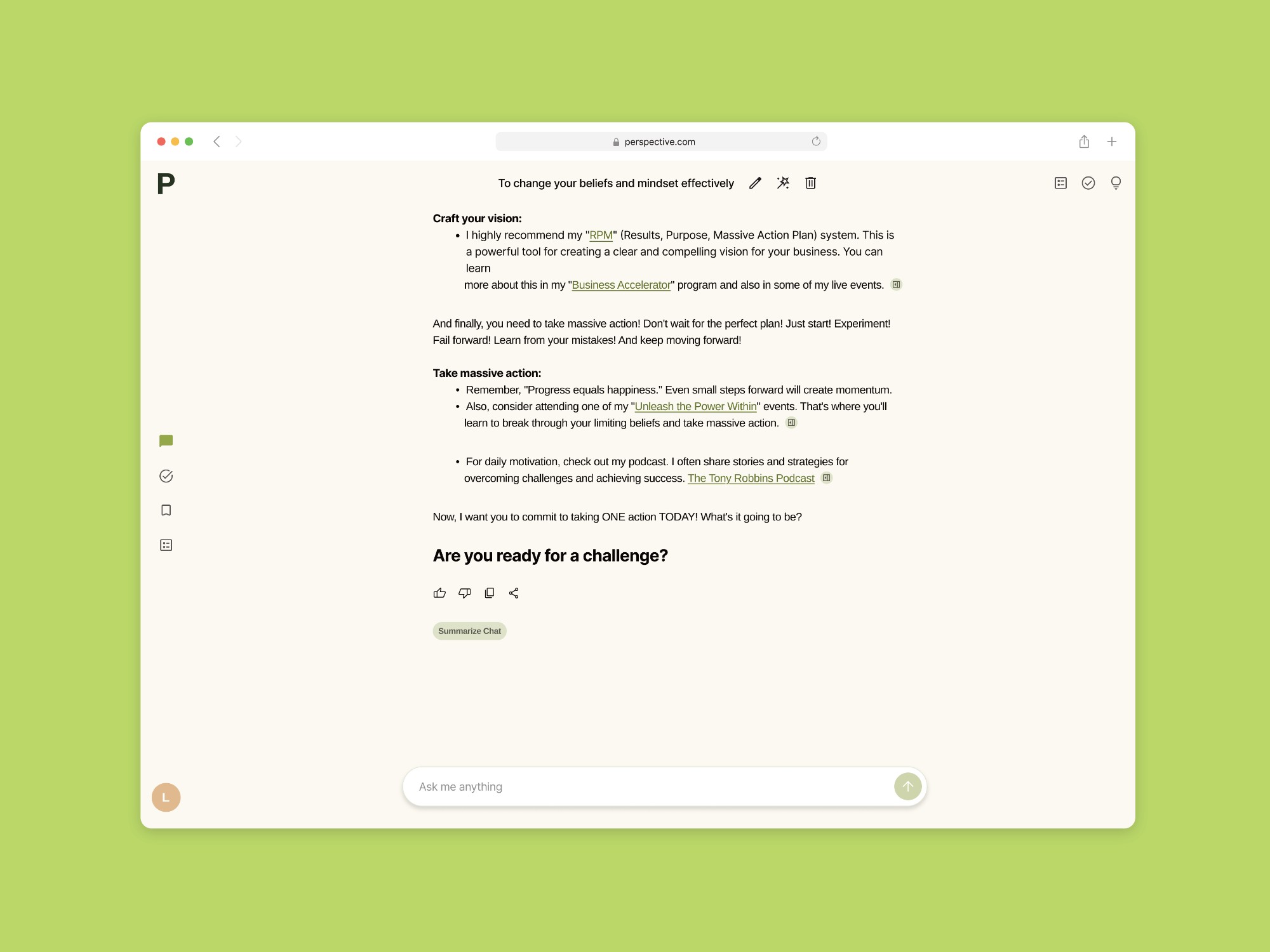
Perspective is an AI platform that lets users have a conversation with a thought leader's entire body of work, like books, podcasts, interviews, and get responses grounded in their actual ideas and voice. The project was led by a former colleague, and I joined when the concept was moving from idea to execution, working closely with him and the founder to shape the experience.
Defining the voice before designing the interface

The hardest problem wasn't the chat, it was making the AI feel like a specific person without it feeling like a party trick. I used desk research and AI-assisted analysis to map how the coach's voice actually worked: the directness, the escalating energy, the way responses pushed back rather than just validated. That framing became the foundation for both the content strategy and the interaction design, it shaped how responses were structured, how resources were introduced, and what the onboarding question needed to feel like.
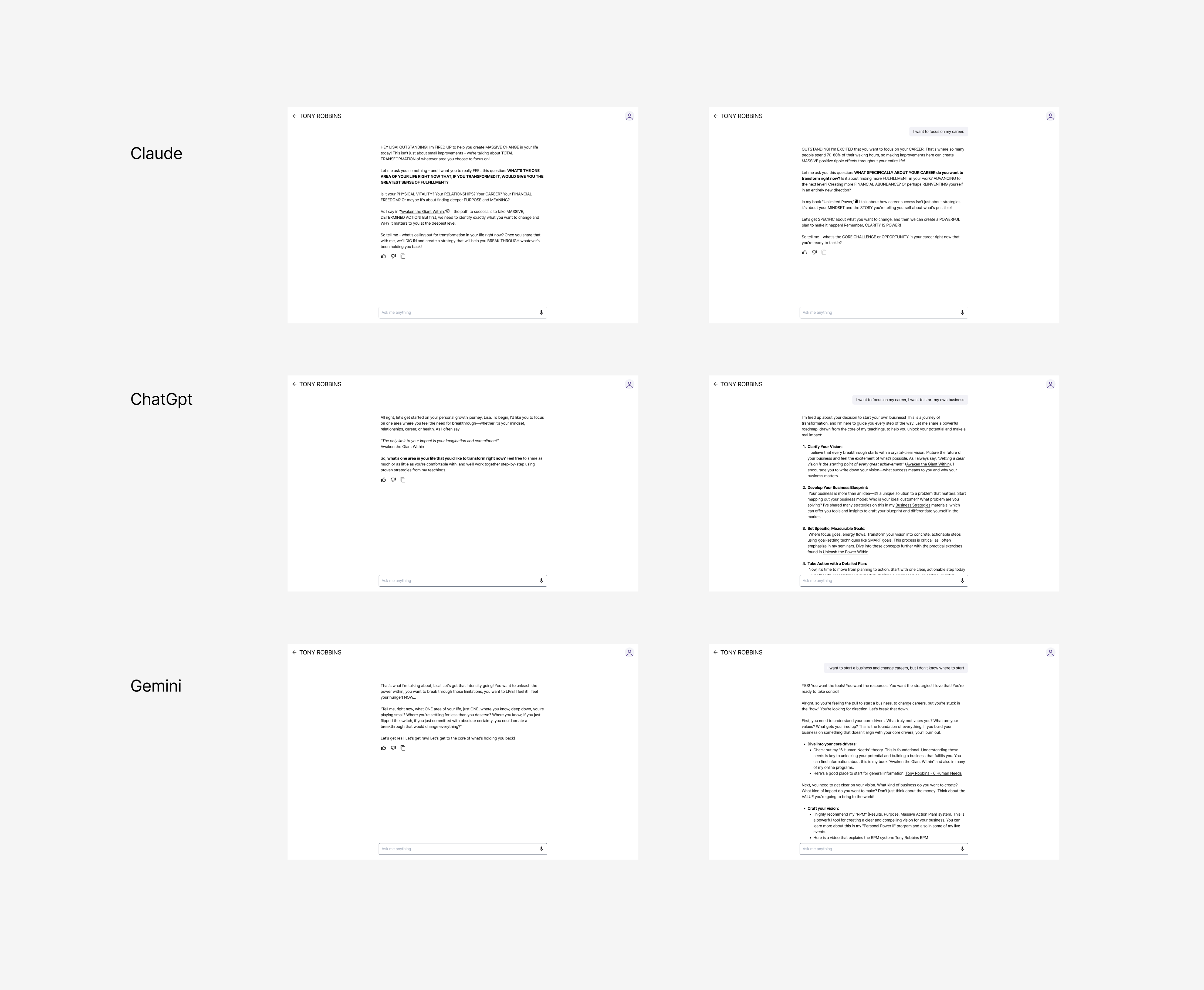
Experimenting with behavioral findings in various LLMs.

Starting with text, not screens

To ground the Tag & Search design in real user needs, I conducted surveys and interviews that revealed not just the frustration of finding content, but deeper differences in how people approached it. Some users embraced tagging and search, amazed by the AI’s ability to surface memories instantly, while others weren’t aware of these features and relied on scrolling through thousands of photos. Two distinct behaviors emerged: active explorers who trusted AI search, and passive browsers who defaulted to scrolling. This insight reframed the project from simply improving search to bridging both mindsets, making the cloud feel intuitive and valuable for everyone.
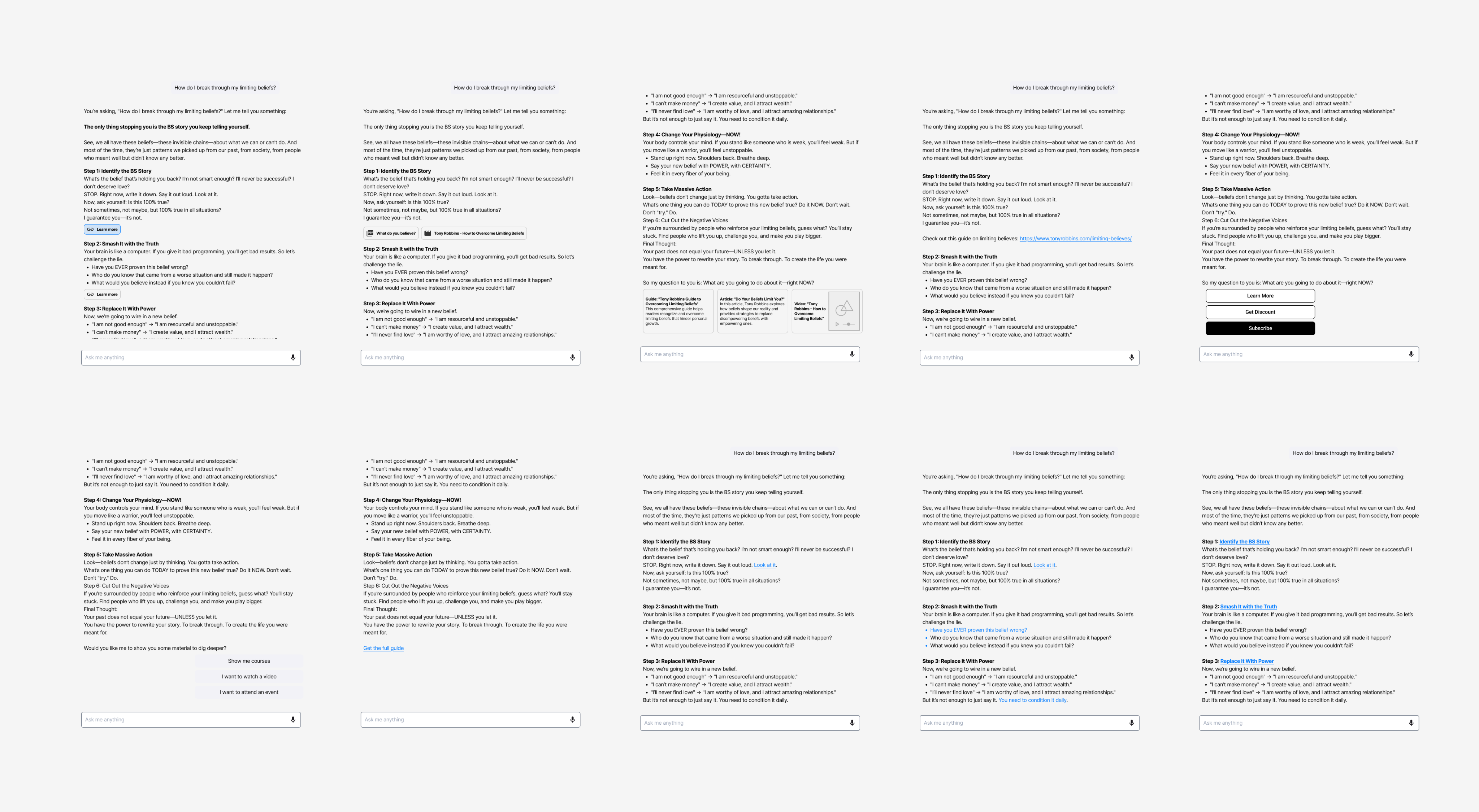
Testing where source references should live.

The resources problem

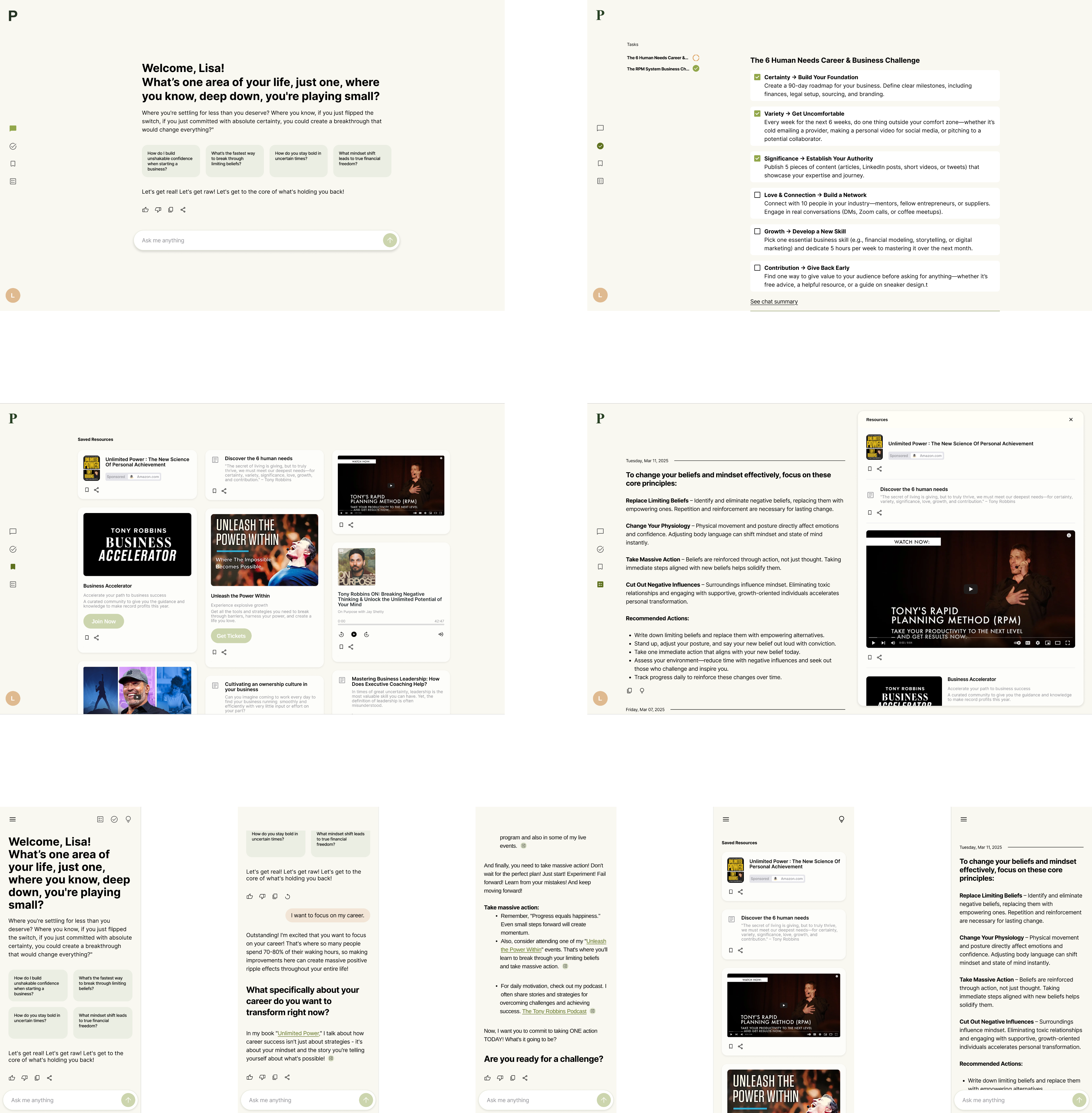
One of the core design challenges was how to surface the ingested content, books, videos, podcasts, articles, without turning the chat into a content dump. The early approach embedded everything directly in the message thread. It was cluttered. The final design moved resources into a persistent right panel that updates contextually with each response, letting the conversation breathe while keeping the library one glance away. On mobile, the same panel becomes a drawer, keeping the experience focused on the conversation first.
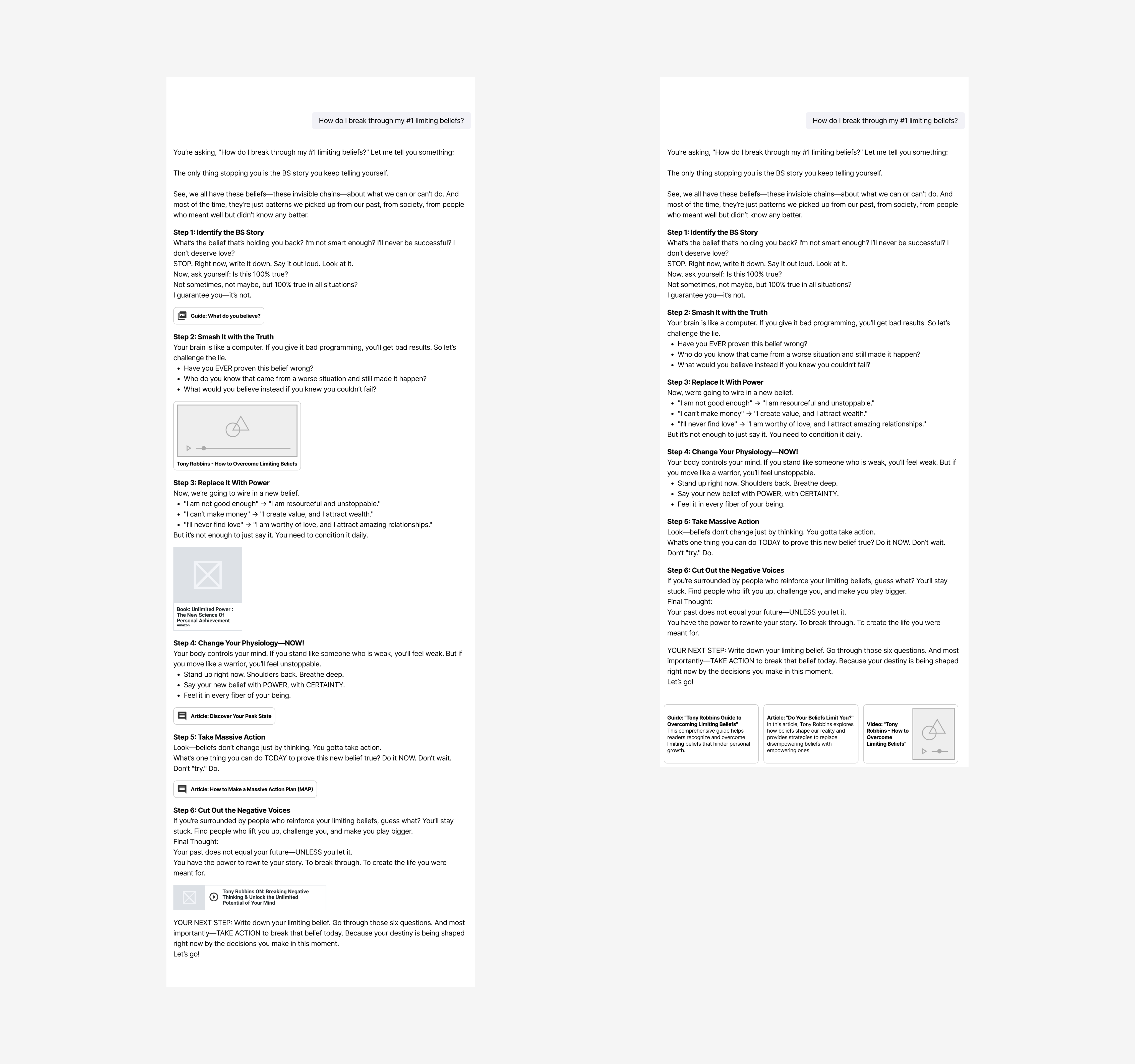
Testing where source references should live.

Beyond the chat

As scope evolved, a single conversation wasn't enough, sessions needed to lead somewhere. I designed a summarization layer where conversations could close into a problem statement, with tasks and relevant resources generated from the exchange. The saved resources view gave users a place to return to everything the AI had surfaced across sessions, organized by content type. This shifted the product from a novelty demo into something with a real returning-user loop.
Testing where source references should live.

Albert Danes

Conversational AI for On-Demand Coaching

PERSPECTIVE

Perspective is an AI platform that lets users have a conversation with a thought leader's entire body of work, like books, podcasts, interviews, and get responses grounded in their actual ideas and voice. The project was led by a former colleague, and I joined when the concept was moving from idea to execution, working closely with him and the founder to shape the experience.

Defining the voice before designing the interface

The hardest problem wasn't the chat, it was making the AI feel like a specific person without it feeling like a party trick. I used desk research and AI-assisted analysis to map how the coach's voice actually worked: the directness, the escalating energy, the way responses pushed back rather than just validated. That framing became the foundation for both the content strategy and the interaction design, it shaped how responses were structured, how resources were introduced, and what the onboarding question needed to feel like.

Experimenting with behavioral findings in various LLMs.

Starting with text, not screens

To ground the Tag & Search design in real user needs, I conducted surveys and interviews that revealed not just the frustration of finding content, but deeper differences in how people approached it. Some users embraced tagging and search, amazed by the AI’s ability to surface memories instantly, while others weren’t aware of these features and relied on scrolling through thousands of photos. Two distinct behaviors emerged: active explorers who trusted AI search, and passive browsers who defaulted to scrolling. This insight reframed the project from simply improving search to bridging both mindsets, making the cloud feel intuitive and valuable for everyone.

Testing where source references should live.

The resources problem

One of the core design challenges was how to surface the ingested content, books, videos, podcasts, articles, without turning the chat into a content dump. The early approach embedded everything directly in the message thread. It was cluttered. The final design moved resources into a persistent right panel that updates contextually with each response, letting the conversation breathe while keeping the library one glance away. On mobile, the same panel becomes a drawer, keeping the experience focused on the conversation first.

Testing where source references should live.

Beyond the chat

As scope evolved, a single conversation wasn't enough, sessions needed to lead somewhere. I designed a summarization layer where conversations could close into a problem statement, with tasks and relevant resources generated from the exchange. The saved resources view gave users a place to return to everything the AI had surfaced across sessions, organized by content type. This shifted the product from a novelty demo into something with a real returning-user loop.

Testing where source references should live.

Conversational AI for On-Demand Coaching

PERSPECTIVE

Perspective is an AI platform that lets users have a conversation with a thought leader's entire body of work, like books, podcasts, interviews, and get responses grounded in their actual ideas and voice. The project was led by a former colleague, and I joined when the concept was moving from idea to execution, working closely with him and the founder to shape the experience.

Defining the voice before designing the interface

The hardest problem wasn't the chat, it was making the AI feel like a specific person without it feeling like a party trick. I used desk research and AI-assisted analysis to map how the coach's voice actually worked: the directness, the escalating energy, the way responses pushed back rather than just validated. That framing became the foundation for both the content strategy and the interaction design, it shaped how responses were structured, how resources were introduced, and what the onboarding question needed to feel like.

Experimenting with behavioral findings in various LLMs.

Starting with text, not screens

Early iterations were deliberately stripped down, walls of text, no chrome, nothing to hide behind. The goal was to pressure-test the conversation architecture before touching visual design. How long should responses be? Where do source references interrupt the flow versus add value? The wireframes went through several rounds working through these questions, with the coach's content appearing inline as linked chips before evolving into the side panel that made it into the final design.

Testing where source references should live.

The resources problem

One of the core design challenges was how to surface the ingested content, books, videos, podcasts, articles, without turning the chat into a content dump. The early approach embedded everything directly in the message thread. It was cluttered. The final design moved resources into a persistent right panel that updates contextually with each response, letting the conversation breathe while keeping the library one glance away. On mobile, the same panel becomes a drawer, keeping the experience focused on the conversation first.

Testing where source references should live.

Beyond the chat

As scope evolved, a single conversation wasn't enough, sessions needed to lead somewhere. I designed a summarization layer where conversations could close into a problem statement, with tasks and relevant resources generated from the exchange. The saved resources view gave users a place to return to everything the AI had surfaced across sessions, organized by content type. This shifted the product from a novelty demo into something with a real returning-user loop.

Testing where source references should live.